By Mumwe Football Academy
Many parents in Kampala ask us the same question: “My child loves football. When is the right time to join an academy?”
There is no single perfect age. Children develop at different speeds, and what suits a confident 7-year-old may not suit a shy one. But there are clear guidelines on what children can handle at each stage, and what they should be doing. This guide will help you decide when to start, what to expect, and how to avoid pushing too hard, too early.
The Short Answer
Most children are ready for fun, play-based football sessions from around 4 to 6 years old, and for structured academy training from around 7 to 8. Before that, the priority is enjoying the ball, moving freely and playing with other children, not tactics or competition.

What matters more than your child’s age is whether they are:
- Physically able to run, jump and change direction with some control
- Able to follow simple instructions and listen to a coach
- Comfortable being away from you for a training session
- Genuinely interested in playing, rather than being pushed
Ages 3 to 5: Play, Not Training
At this age, children are learning basic movement skills. They run, hop, kick and chase, and their attention span is short.
What suits them:
- Short, playful sessions of 30 to 45 minutes
- Lots of time with a ball at their feet
- Simple games, such as chasing, dribbling around cones and kicking at a target
- A relaxed, encouraging atmosphere
What to avoid:
- Formal training drills and positions
- Competitive matches with results and league tables
- Any pressure to perform
At this stage, a good programme is really organised play. The goal is for your child to fall in love with the ball.
Ages 6 to 8: Learning the Fundamentals
Between 6 and 8, children are ready for simple structure. They can follow instructions, play in small groups and begin learning basic technique.
What suits them:
- Regular sessions, one or two times a week
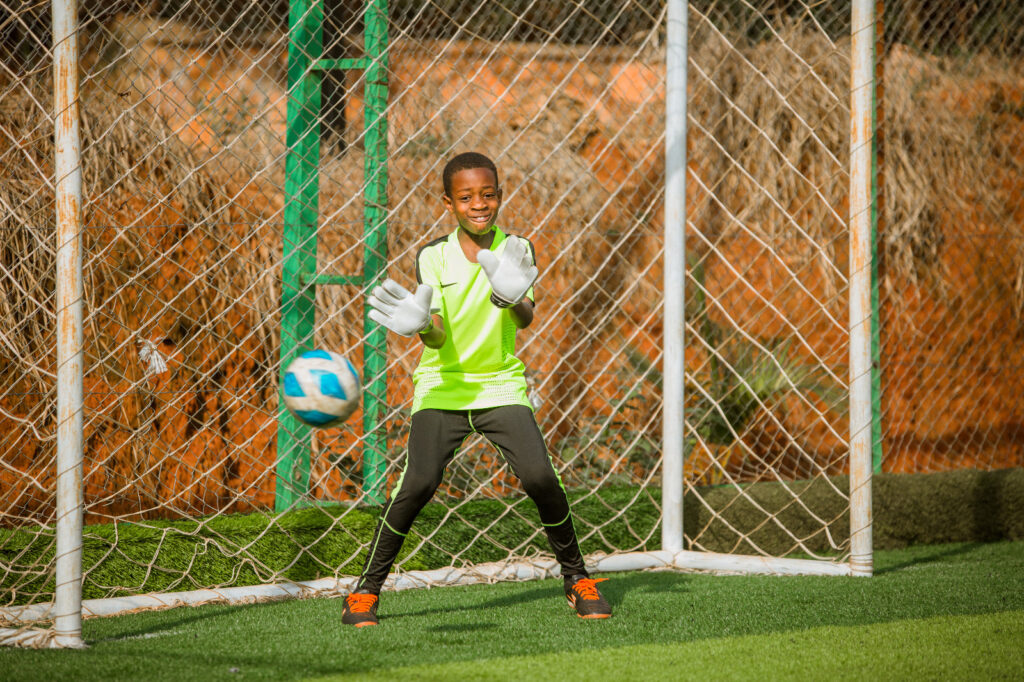
- Ball mastery: dribbling, passing, receiving and shooting
- Small-sided games such as 3v3 or 5v5, where every child gets many touches
- Learning to take turns, share and work with teammates
This is often the best age to join an academy for the first time. Children pick up technical skills quickly, and good habits formed now last for years. Winning should still come second to learning.
Ages 9 to 12: Building Skills and Game Understanding
This is a key stage for technical development. Children now have better coordination and concentration, and they begin to understand space, teamwork and decision-making.
What suits them:
- Two to three sessions a week, plus matches
- Developing both feet, quicker passing and better control under pressure
- Basic tactical ideas: positioning, movement off the ball, and defending as a team
- Playing in different positions to understand the whole game
If your child is only now starting academy training at this age, don’t worry. Many children begin at 9, 10 or 11 and develop very well, especially if they have played informally with friends.

Ages 13 to 16: Competitive Development
Teenagers are ready for more intensive, competitive training. This is also a time of rapid physical growth, and it requires care.
What suits them:
- More demanding training, including fitness, speed and strength work
- Tactical detail, specialist positions and match preparation
- Regular competitive matches and tournaments
- Support with discipline, nutrition, recovery and balancing school
Coaches should watch for injuries and fatigue during growth spurts, and make sure players keep up with their schoolwork.
Is It Ever Too Late to Start?
No. Some players join an academy at 12, 14 or even later and still progress well, especially if they are athletic, motivated and willing to learn. Starting early gives children more time to develop technique, but it does not guarantee success. Many young players who start early lose interest or burn out, while later starters often stay hungry and committed.
If your child is older and new to organised football, speak to the coaches. A good academy will assess where your child is and place them in a suitable group.
Signs Your Child Is Ready
Look for these signs, whatever the age:
- They ask to play football, or kick a ball around at every chance
- They can concentrate on a simple activity for 20 to 30 minutes
- They enjoy playing with other children
- They accept instructions from adults other than you
- They recover well from small knocks and disappointments
Signs Your Child May Not Be Ready Yet
It is fine to wait if your child:
- Cries or panics when left at a session
- Shows no interest in football, or only goes because you want them to
- Gets exhausted or injured easily
- Is very young and still needs lots of rest and free play
Waiting a few months is better than forcing a child into something that makes them dislike the sport.
Common Mistakes Parents Make
1. Starting too serious, too soon. Very young children need fun, not pressure.
2. Chasing early results. The best young team is not always the one that develops the best players.
3. Specialising too early. Younger children benefit from playing different positions and even other sports, which build general athletic skills.
4. Ignoring school. Education should never take second place. Choose training times that fit around school.
5. Comparing children. Kids mature at different rates. A smaller or later-developing player may catch up later.
6. Believing academy promises. No responsible academy can guarantee your child will become a professional.
How to Choose the Right Programme for Your Child’s Age
Whatever the age, look for:
- Coaches who understand how children develop and know how to work with that age group
- Sessions that are fun and full of touches on the ball
- Small groups so each child gets attention
- A safe, supervised environment
- Honest communication with parents
For more detail, see our parent’s checklist, What to Look for in a Football Academy in Kampala.
Final Thoughts
The best age to start academy training is when your child is physically ready, mentally interested and enjoying the game. For most families in Kampala, that means play-based football in the early years and more structured training from around 7 or 8, with serious competition coming later.
Don’t rush it. A child who loves football at 6 is far more likely to still be playing, learning and improving at 16.
At Mumwe Football Academy, we have been developing young players in Uganda since 2015. If you’re wondering whether your child is ready, you are welcome to visit, watch a session and talk to our coaches.
Not sure where your child fits? Get in touch and we’ll help you find the right starting point. Yiou can email to info@footballacademyuganda.org or call us on +256-700135510.