For many Ugandan families, football is more than a game. It is a possible route to a good education. A scholarship or bursary can cover school fees, open the door to university, and give a young player the chance to develop their talent without putting the whole family under financial pressure.
But scholarships are competitive, and the rules are not always clear. This guide explains the main types of football scholarship available to Ugandan players, how to prepare, and how to apply safely.
Note: Scholarship schemes, deadlines and requirements change often. Always confirm the latest details directly with the school, university or official body before you apply.
First, Understand the Difference: Scholarship vs. Bursary
The two words are often used loosely in Uganda, but they can mean different things:
- Scholarship: usually a formal award, often covering tuition fully or partly, sometimes with accommodation or other costs.
- Bursary: often a reduction or waiver of fees, sometimes given by schools in exchange for playing for the school team.
Always ask exactly what is covered: tuition, boarding, meals, uniform, books, medical care, transport. “Scholarship” can mean very different things from one place to another.
Route 1: Secondary School Sports Bursaries
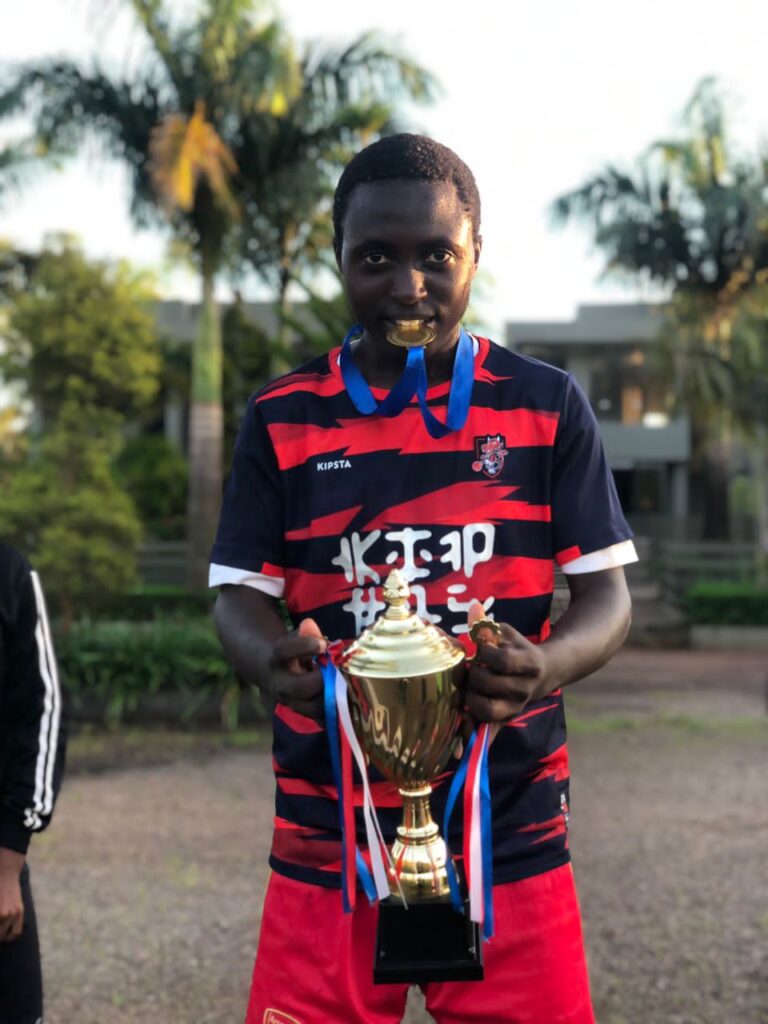
Many secondary schools offer bursaries to talented players, especially schools that compete strongly in the Uganda Secondary Schools Sports Association (USSSA) competitions. A good young footballer may be offered a reduced fee or a full waiver in return for representing the school.
What schools usually look for:
- Strong technical ability and good match performance
- Good discipline and attitude
- Acceptable academic results, or at least the ability to cope in class
- Age eligibility for the level of competition
Be careful here. USSSA has had to introduce guidelines to protect student-athletes, after reports that some schools failed to honour verbal bursary agreements, especially when their teams did not advance in competitions. The lesson for parents is clear: get every bursary agreement in writing. The document should state what is covered, for how long, and under what conditions it can be withdrawn.
Route 2: Government Sports Scheme for Public Universities
Uganda’s public universities admit some students through a sports scheme. For the 2025–2026 academic year, more than 100 student-athletes were admitted to nine public universities under a government-sponsored sports scheme managed with USSSA. Those universities were Kyambogo, Makerere, Gulu, Mbarara University of Science and Technology, Lira, Soroti, Busitema, MUBS and Kabale.

The important points for players and parents are:
- Candidates must still meet the minimum academic requirements for university admission, so sporting talent does not replace good grades.
- Universities release separate admission lists for the sports scheme alongside other categories.
- Football is only one of many sports competing for a limited number of places, so numbers per university can be small.
There is also a Sports Bonus Points scheme run through the National Council of Sports (NCS), which aims to give sporting candidates an advantage in gaining admission to university. The FUFA guidance on this is some years old, so ask FUFA, your school’s sports department or the NCS how the process works today.
Route 3: Private University Sports Scholarships
Several private universities in Uganda actively recruit athletes.
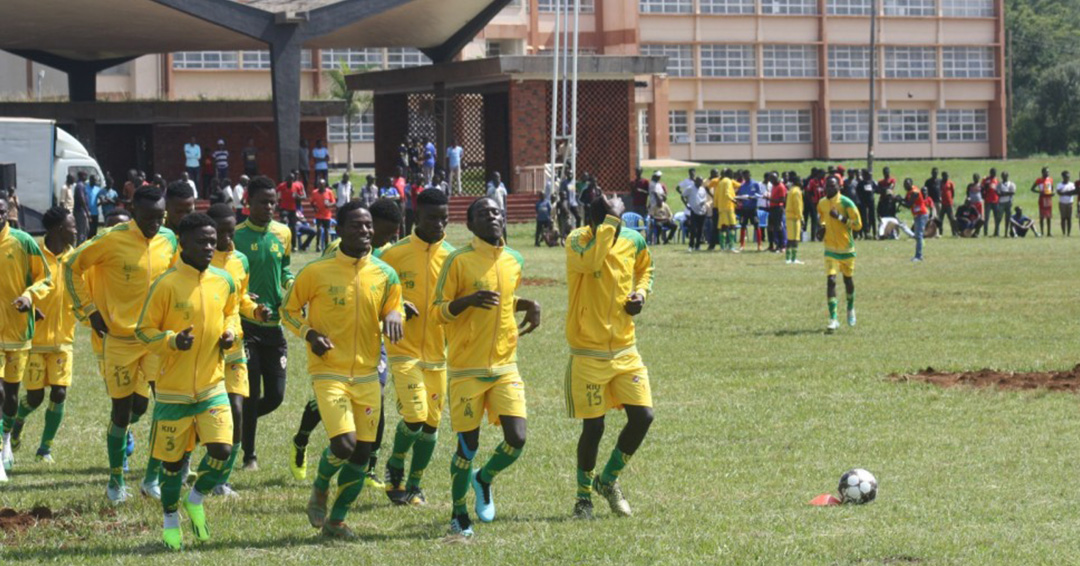
- Kampala International University (KIU) runs a sports scholarship scheme. KIU reported that its January 2025 intake brought the total number of beneficiaries to 504 over the university’s 25-year history. It also states that candidates are first admitted like other students, must meet minimum academic standards, and are then called for trials.
- Ndejje University is known for a strong bursary scheme for elite athletes, and has been successful in the university games.
- Uganda Christian University (UCU) also offers sports scholarships. One student-athlete’s story describes how UCU coaches identified him at a national schools competition, which shows how important it is to play and be seen at high-level school events.
Other universities may have similar programmes, so check each one’s admissions or sports department. Programmes and the number of places vary from year to year.
Route 4: Scholarships Abroad
Some Ugandan players earn places at universities abroad, for example in the United States, where sports scholarships are common, or in the United Kingdom, where some universities offer sports awards in specific sports.
This route is more difficult and expensive to access, and usually requires:
- Very strong academic results and often English-language or entrance tests
- A highlight video, player profile and references from coaches
- Contact with coaches or recruitment programmes abroad
- Passport, visa and financial documentation
Be especially careful with agents and “recruiters” who ask for payment. Genuine opportunities do not need a parent to pay large sums upfront. Verify any person or organisation independently before you share documents or send money.
Step-by-Step: How to Apply
Step 1: Keep your grades strong. Almost every scholarship, local or international, requires you to meet academic standards. Football can help you, but it rarely replaces results.

Step 2: Play at the highest level you can. Scouts, coaches and university sports officers watch school competitions, tournaments and league matches. Regular, high-quality games give you the best chance to be noticed.
Step 3: Build your football record. Keep a simple record of your teams, tournaments, awards, captaincy and any representative selections.
Step 4: Prepare a highlight video and player profile. Keep the video to 2 to 4 minutes, with your name, position and contact details at the start. The profile should be a one-page summary of your personal details, position, achievements and references.
Step 5: Get references. Ask your coach, sports teacher or head teacher for a short letter describing your ability, attitude and character.
Step 6: Gather your documents. Typically you will need:
- Academic reports or certificates
- Birth certificate or national ID
- Passport photos
- Recommendation letters
- Proof of football participation, such as match records or tournament certificates
Step 7: Find official information. Check the website or admissions office of each school or university, and ask about:
- Application deadlines
- Whether trials are required
- What is covered by the scholarship
- Whether the award continues each year and under what conditions
Step 8: Prepare for trials. If you are called for a trial, arrive early with your boots, shin guards, water and a positive attitude. Play simple, effective football and show good discipline.
Step 9: Read the agreement before you accept. Make sure the terms are written down and that you understand them, including what happens if you get injured, change schools or lose your place in the team.
Step 10: Keep your side of the deal. Scholarship players are expected to train, represent the school or university and keep their grades up. Losing either performance or discipline can put the award at risk.
Questions to Ask Before Accepting Any Scholarship
- What exactly is covered: tuition, boarding, meals, uniform, books?
- Is it for one year or the whole programme?
- What do I have to do in return, and what happens if I am injured?
- Can it be withdrawn, and under what conditions?
- Will I still have time to study properly?
- Is everything in writing, with a signature from the school or university?
Red Flags and Scams
- Anyone asking for money to guarantee a scholarship or a place abroad
- Verbal promises only, with nothing in writing
- No named school, university or official contact you can verify
- Pressure to decide quickly or to keep the offer secret from parents or coaches
- Requests for private documents with no clear reason
- Guarantees of professional contracts along with the scholarship
If something feels wrong, ask a trusted coach, teacher or experienced academy to check the offer before you reply.
What If You Don’t Get a Scholarship?
Not every talented player gets a scholarship. That doesn’t mean the end of the football journey. Other options include:
- Playing for a good club or academy while studying
- Applying for partial bursaries or fee reductions
- Entering university through the normal route and joining the university team
- Studying coaching, sports science, physiotherapy or sports management
- Trying again after a year of further development
Education stays valuable whether or not football becomes a career.
Final Thoughts

A football scholarship rewards talent, but also discipline, results and good character. The players who succeed are usually the ones who train hard, play regularly, keep up with their schoolwork and prepare properly for every application.
At Mumwe Football Academy, we help young players grow through professional coaching, regular matches and a strong focus on education and discipline. If you’re serious about football and your future, we’d be glad to meet you.
Want to start building your football future? Get in touch to ask about joining Mumwe Football Academy. Email to info@footballacademyuganda.org or call +256-700135510.