Football, or association football, is more than just a sport in Uganda; it is a national passion, a cultural thread, and a powerful source of national identity and pride. Its history is a rich tapestry woven through the colonial era, political upheaval, and periods of exhilarating success on the African stage.
From its missionary roots in the late 19th century to the modern-day struggle for World Cup qualification, here is an in-depth look at the enduring history of football in the Pearl of Africa.
1. The Colonial Introduction (1897 – 1920s)
Football’s journey to Uganda began in 1897 when it was introduced by British Anglican missionaries.
- Pioneer Figures: Key figures like Archdeacon Robert Henry Walker and George Lawrence Pilkington from the Church Missionary Society (CMS) arranged for a football to be sent from England and began teaching the game to local youth, primarily through mission schools like King’s School Budo.
- The Early Challenges: Initial adoption was slow and often comical, with royal participants sometimes followed by umbrella bearers and stool-bearers. However, the athleticism and competitive nature of the sport quickly resonated with the indigenous population.
- The First Teams: Early organised football saw the establishment of teams like the Budo Old Boys around 1909 and Nsambya FC in 1911.
2. Formalisation and Regional Dominance (1920s – 1970s)
The inter-war period saw the game formally structured, leading to Uganda’s first taste of regional dominance.
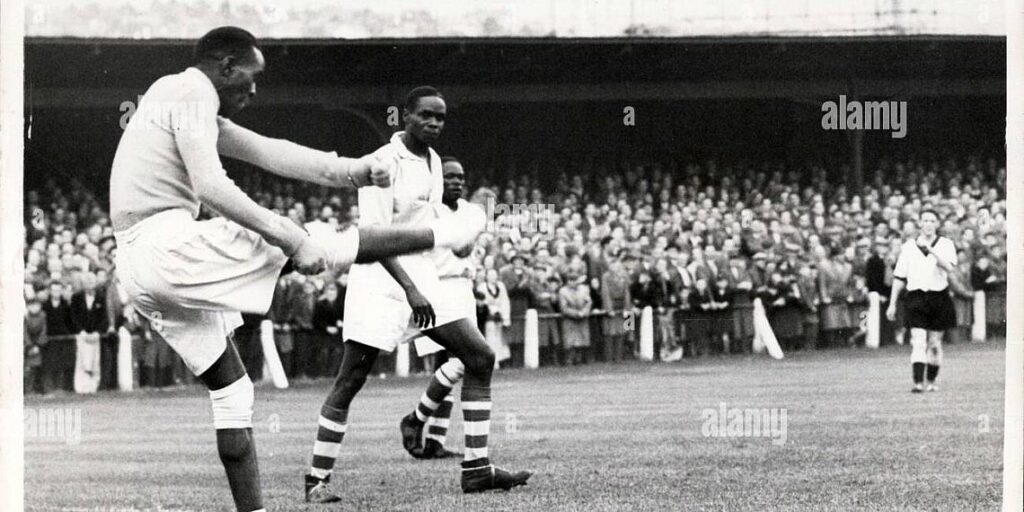
- Establishment of Governance: The Kampala Football Association (KFA) was established in 1924. This body eventually evolved into the Uganda Football Association (UFA) in the late 1940s, and then the Federation of Uganda Football Associations (FUFA) in 1967, which remains the governing body today.
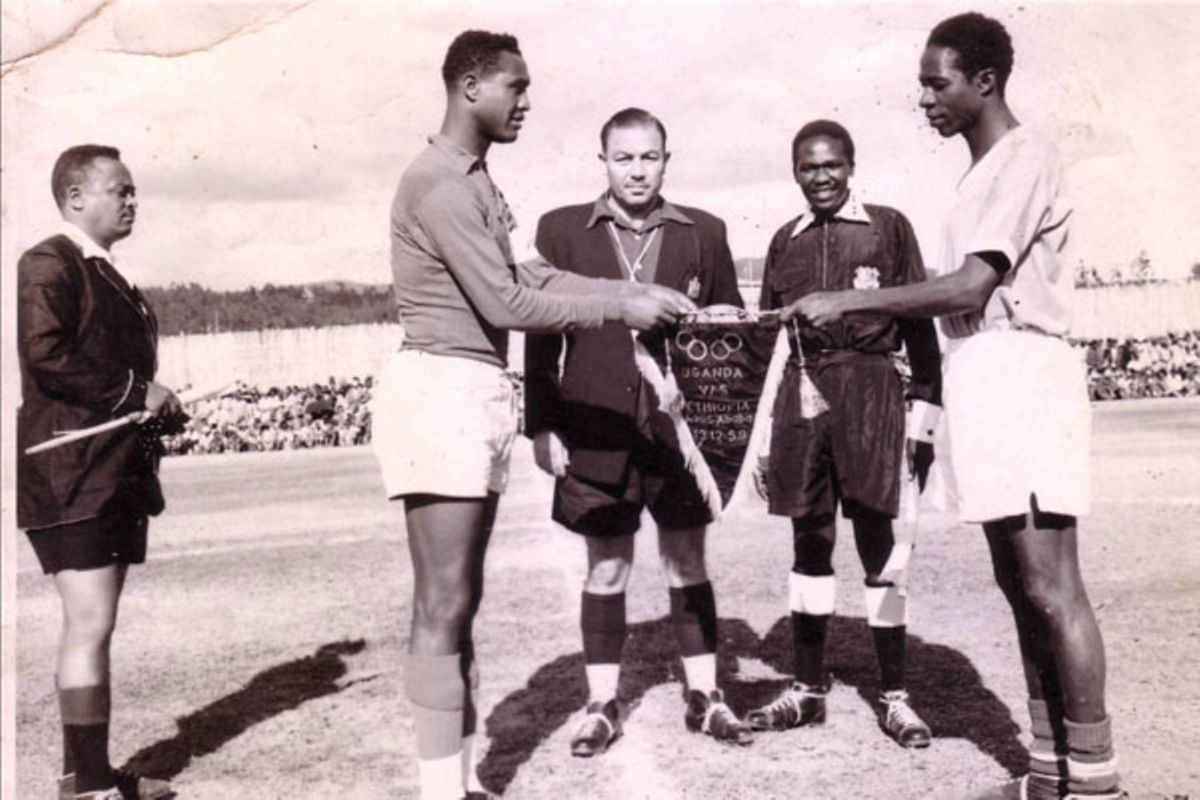
- The Gossage Cup: International competition began early. In 1926, Uganda, Kenya, Tanganyika (Tanzania), and Zanzibar contested the inaugural Gossage Cup (the precursor to the CECAFA Senior Challenge Cup). Uganda rapidly became a powerhouse in this regional tournament, establishing a fierce rivalry with Kenya.
- International Affiliation: The UFA affiliated with FIFA in 1960 and the Confederation of African Football (CAF) in 1961, shortly before Uganda achieved independence in 1962.
- The National League: The National First Division league was launched in 1968, which was eventually won by Prisons FC, formalising the local club scene and setting the stage for the rise of legendary clubs.
3. The Golden Generation: The 1978 AFCON Final
The 1970s marked the golden age of Ugandan football, culminating in an unforgettable performance at the Africa Cup of Nations (AFCON).
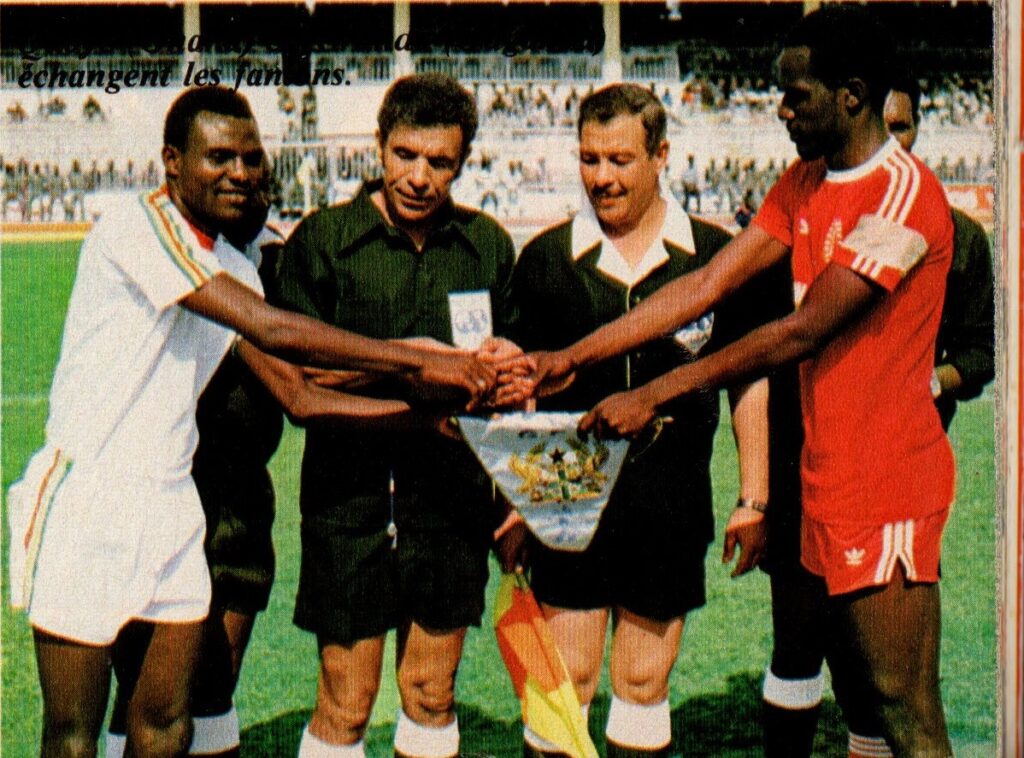
- The Rise of the Cranes: The national team, nicknamed The Cranes after the Grey Crowned Crane on the national flag, qualified for the AFCON multiple times during this period (1962, 1968, 1974, 1976).
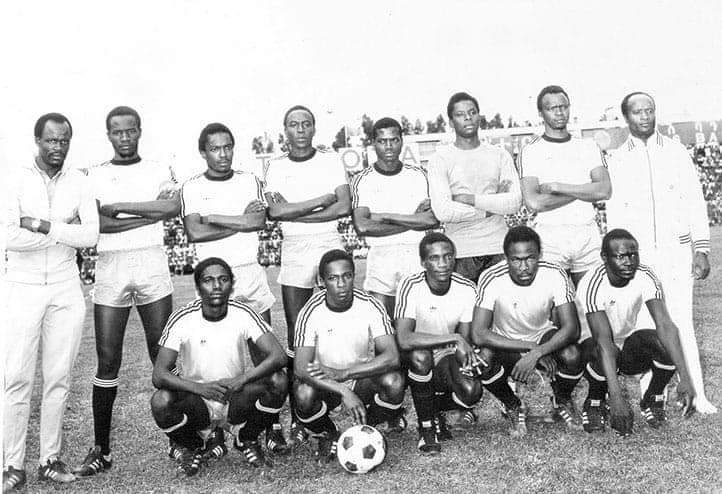
- The 1978 AFCON: Under the management of Peter Okee, and with the support of then-President Idi Amin, The Cranes delivered their best-ever performance. They topped their group and defeated Nigeria 2-1 in the semi-finals to reach the final against the hosts, Ghana. Although they lost 2-0, the Runners-Up finish in the 1978 AFCON remains Uganda’s most significant international football achievement to date.
- Club Dominance: Local clubs also experienced continental success. Simba FC reached the final of the African Cup of Champions Clubs in 1972.
4. The Era of Club Giants (1980s – 2000s)
Following the 1978 national success and the subsequent political instability, club football took centre stage, leading to the dominance of two giants:
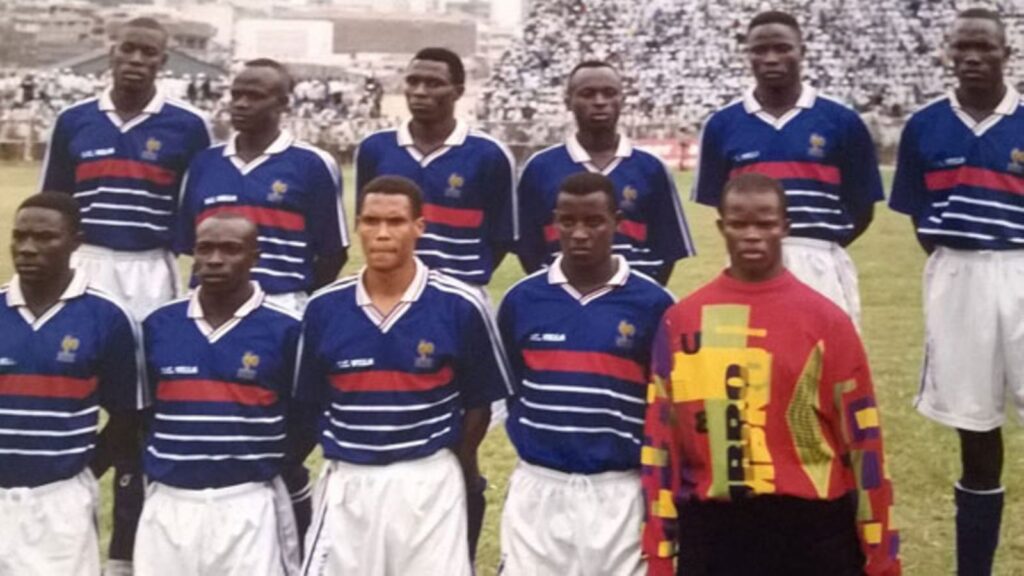
- SC Villa (Sports Club Villa): Founded in 1960, SC Villa became the most successful club in Ugandan history, winning the first Uganda Super League title in 1982 and achieving remarkable dominance, including a run of seven consecutive league titles between 1998 and 2004. They also reached the finals of the African Cup of Champions Clubs in 1991 and the CAF Cup in 1992.
- Express FC: Nicknamed the Red Eagles, Express FC is one of the oldest clubs and has maintained a fierce rivalry with SC Villa, creating the foundation for the classic local derbies.
- KCCA FC (Kampala City Council Authority FC): Also a major force, KCCA FC (formerly Kampala City Council FC) won the CECAFA Clubs Cup in 1978.
- Ugandan Legends: This era produced several national heroes, including the technically gifted midfielder Phillip Omondi (often cited as Uganda’s greatest-ever player), defender Jimmy Kirunda, and striker Majid Musisi, who was one of the first Ugandan players to move to professional European football (Turkey).
5. The Modern Cranes (2000s – Present)
The 21st century has been defined by the national team’s lengthy pursuit of a return to the AFCON, a dream finally realised after a 39-year wait.
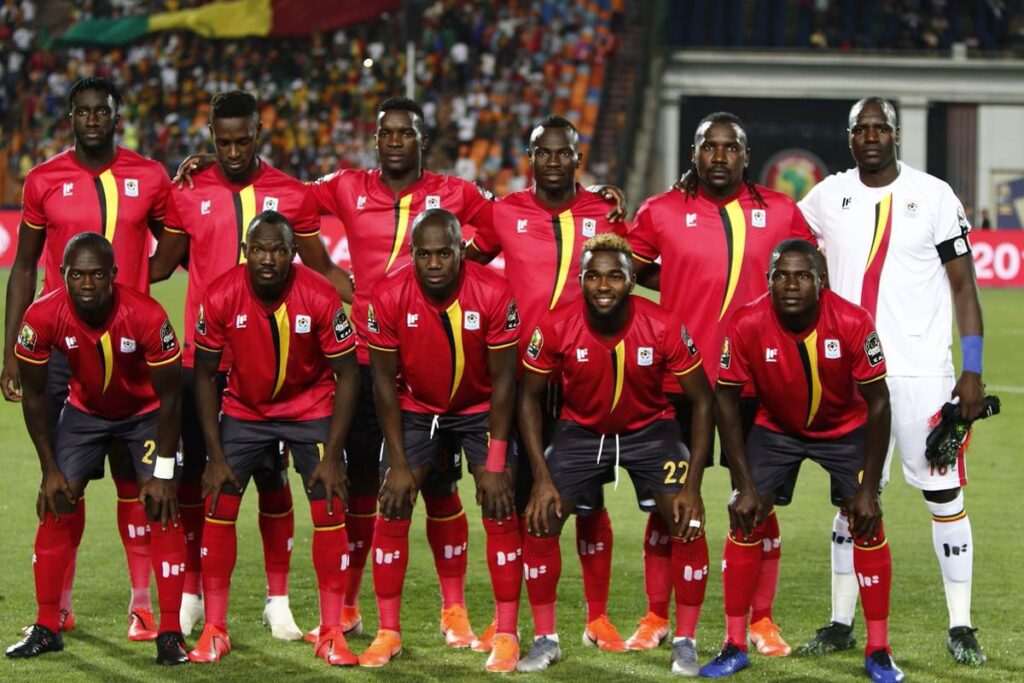
- The Near Misses: For over a decade, The Cranes were famous for the “nearly-there” campaigns, often falling short of qualification in the last game, most notably the 1-1 draw needed against Kenya in 2011.
- The Breakthrough: The drought finally ended in 2017 when, under the management of Milutin “Micho” Sredojević, Uganda qualified for the 2017 Africa Cup of Nations in Gabon. They followed this up with another successful qualification for the 2019 AFCON in Egypt, where they achieved their first AFCON victory in 41 years (a 2-0 win against DR Congo) and reached the Round of 16.
- The Denis Onyango Factor: The success of this era was heavily underpinned by the stability and leadership of legendary goalkeeper Denis Onyango, who captained the team and became one of the most decorated African club players while at Mamelodi Sundowns.
- CECAFA Record: Uganda has maintained its dominance in the regional CECAFA Senior Challenge Cup, holding the record for the most titles with 15 victories.
- The Future: Uganda successfully co-hosted the 2024 African Nations Championship (CHAN) and is now part of the successful PAMOJA bid to co-host the 2027 Africa Cup of Nations alongside Kenya and Tanzania, a pivotal moment set to drive significant infrastructure and development investment.
The history of football in Uganda is a cycle of passion and persistence. It is a story of community bonds forged in mission schools, national heartbreak and triumph on the continental stage, and the enduring hope that one day, the Cranes will finally return to the AFCON final and perhaps, lift the trophy.
For m ore info about Uganda’s football history- feel free to reach out to us by sending an email to info@footballacademyuganda.org or calling us on +256-700135510 to speak with the reservations team.
Bula